

The Largest Blueberry Conference in This Part of the World to Take Place in Poland This March

Poland is currently one of the key players on the global highbush blueberry market. With more than 13,000 hectares of plantations, the country is the European leader and ranks 5th worldwide in terms of cultivated area. It is therefore no coincidence that Poland has been hosting the International Blueberry Conference for years – the most important industry event in this part of the world. The 14th edition of the conference will take place on 5–6 March 2026.
Polish Blueberries on the Global Stage
While Spain leads Europe in terms of total blueberry production, Poland ranks 9th globally, with annual production estimated at 63–66 thousand tonnes. After years of rapid growth, the Polish blueberry sector is now entering a new phase, shaped by changing market conditions and increasing economic pressure.
The International Blueberry Conference has long served as a meeting point for growers, traders, advisors, scientists, and suppliers of production technologies, offering a platform for knowledge exchange and discussion on the future of the industry.
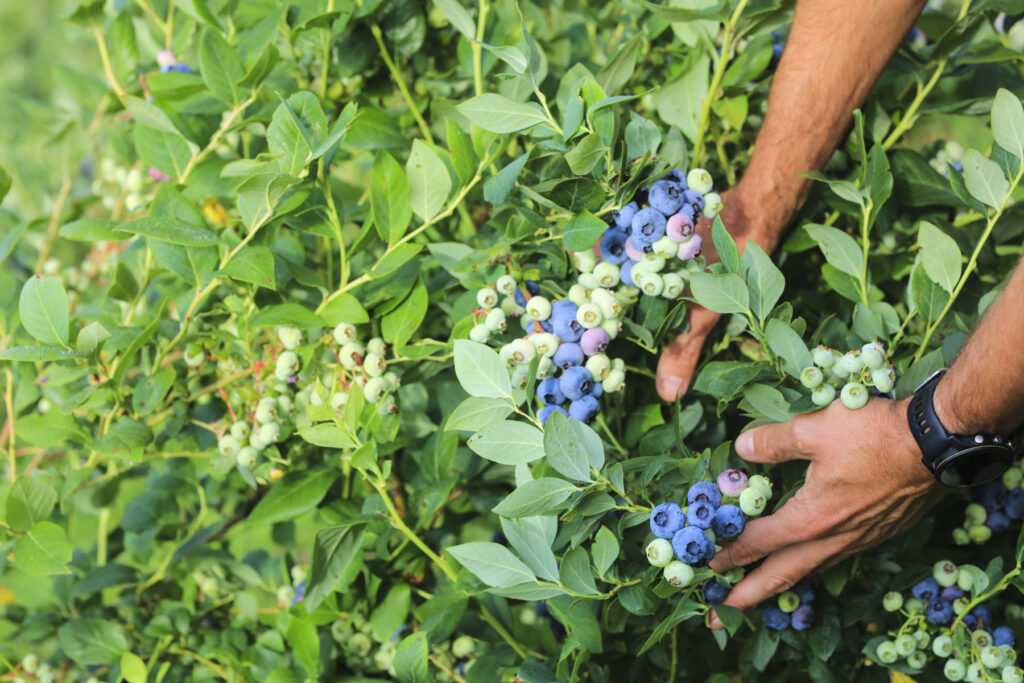
Fruit quality is a key element in the further development of the blueberry business
A Growing Market – but at a Slower Pace
According to data from the International Blueberry Organization, blueberry acreage in the EMEA region increased from 42,000 ha in 2020 to 58,000 ha in 2024, while total production exceeded 400,000 tonnes. Despite this significant increase in supply, global demand for blueberries remains strong.
In Poland, however, after years of dynamic expansion, the blueberry acreage has shown signs of stabilization in recent seasons:
| Year | 2020 | 2021 | 2022 | 2023 | 2024 | 2025 |
| Highbush blueberry (thousand ha) | 9.7 | 10.7 | 11.4 | 12.4 | 12.5 | 12.5 |
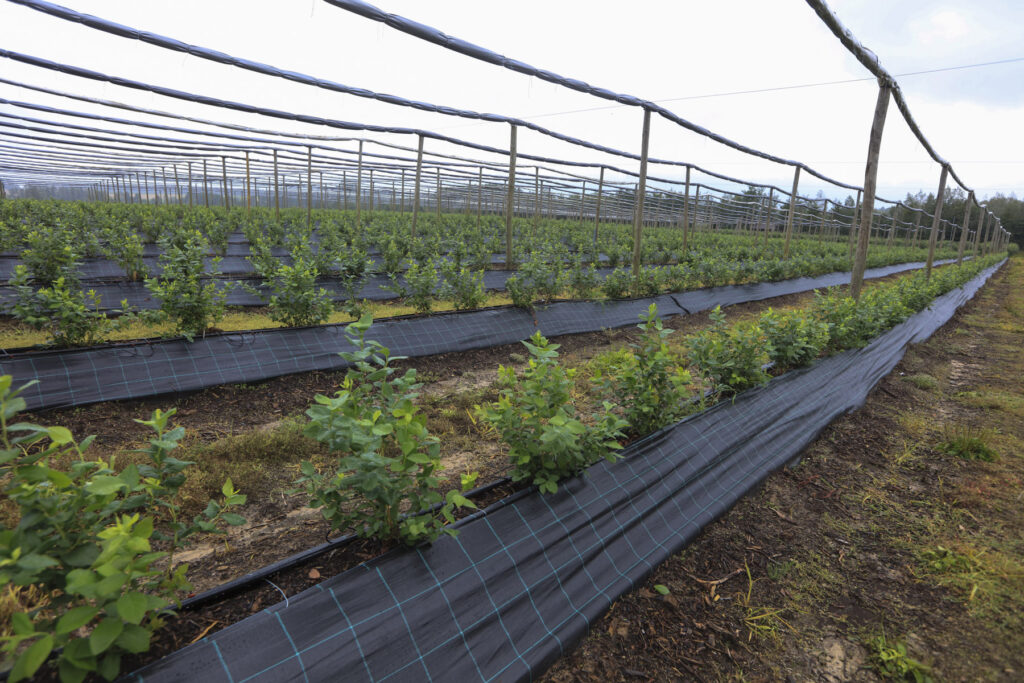
Establishing new blueberry plantations is currently a huge investment
Profitability Under Increasing Pressure
One of the most pressing challenges facing the industry is the declining profitability of blueberry production. Rising costs – particularly labor, harvesting, and production inputs – are placing strong pressure on growers’ margins. Official data from Poland indicate that the cost of producing 1 kg of blueberries now exceeds 3,1 euro, while market prices during peak season often fall below this level.
An analysis by Mirosław Garliński, published in Jagodnik magazine (Issue 2/2026), clearly illustrates this trend. Over the past 25 years:
- blueberry prices have increased by 68.7%,
- production costs have risen by as much as 170%.
As a result, profit margins have been steadily shrinking, and the economic risk associated with blueberry production continues to grow.
New Plantations – a High-Risk Investment
High costs are also reshaping decisions regarding the establishment of new plantations. In recent years, prices of peat – a key growing medium for blueberries – have increased significantly, while its availability has become more limited. It is estimated that establishing one hectare of blueberries in Poland currently requires an investment of 60 000-72 000 euro, including land preparation, planting material, and irrigation systems.
Consequently, investment decisions today require far more careful planning and economic analysis than in the past.

The Blueberry Conference has been bringing together blueberry market leaders for 14 years and indicating development directions.
Export and Shelf Life – A Key Opportunity?
One potential path to improving profitability lies in expanding exports beyond European markets. However, this strategy comes with a major challenge: shelf life, or postharvest fruit longevity. This issue will be addressed during the conference by Marco Butera, advisor at Better Berries.
As he emphasizes, postharvest treatments can only maintain, not improve, fruit quality:
“Scientific literature clearly shows that the physiological condition of the fruit at harvest – not postharvest interventions – determines its storage potential. Fertilization and fertigation are often overestimated when genetic limitations or errors in harvesting and postharvest logistics occur,” notes Butera.
North vs South – Global Competition
Market changes are also driven by increasingly strict global quality requirements. Blueberries have become a year-round product on supermarket shelves, intensifying competition between production regions. European growers, relying mainly on northern highbush varieties, are now facing strong competition from southern regions, where southern-type varieties dominate.
These issues will be discussed during the panel debate “Perspectives and Challenges for the Further Development of Blueberry Production in Europe”, moderated by Dominika Kozarzewska from the Polish Blueberry Promotion Foundation. Additionally, Stephen Taylor of Winterwood Farms – a grower with plantations in Poland, the United Kingdom, and South Africa – will present his lecture “North vs South”, comparing production realities across regions.
Knowledge Sharing in a Time of Change
Climate change, extreme weather events, rising production costs, mechanization of harvesting, new varieties, and workforce management – the list of challenges facing blueberry growers continues to grow. Participation in the International Blueberry Conference offers a unique opportunity to gain insight into current market realities and exchange experiences with growers from across Europe and around the world.
For 14 years, the International Blueberry Conference has been bringing together stakeholders from the global blueberry industry, helping to build a more resilient and sustainable future for the sector.
📅 14th International Blueberry Conference – 5–6 March 2026
🔗 Participant registration is now open – https://konferencjaborowkowa.pl/en/registration/